Black and white living room ideas

Affiliate Disclosure: DecorDesignIdeas.com is a participant in the Amazon Services LLC Associates Program, an affiliate advertising program designed to provide a means for sites to earn advertising fees by advertising and linking to Amazon.com.
As an Amazon Associate, we earn from qualifying purchases. This comes at no extra cost to you.
Black and white rooms photograph well. They also fail frequently in real life. The problem is not the color palette: it is the flatness. Without texture, warmth, and deliberate contrast, a monochrome living room feels like a waiting room at a law office.
Here is how to build one that works, with specific furniture choices, material pairings, and the accent color rules that prevent a sterile result.
For more on this topic, see our guide on How to arrange furniture in a small square room.
Start with the sofa: it anchors everything
The sofa sets the tone for the entire room. In a black and white scheme, it immediately declares which color dominates.
For more on this topic, see our guide on Living room lighting ideas that set the right mood.
White sofa, black accents creates an airy, open feeling. It works best in rooms with natural light and at least 200 square feet of open space. White performance fabrics (Crypton, Revolution) resist stains better than traditional upholstery. Budget roughly $800–$1,500 for a quality white sofa that will not yellow within two years.
Black sofa, white walls feels grounded and dramatic. It anchors large rooms and hides wear better. A black leather Chesterfield or a deep charcoal linen sofa both work: leather adds formality, linen keeps things relaxed.
What does not work: A black sofa in a small room with limited windows. It absorbs light and makes the space feel like a cave.
| Sofa choice | Room size | Light needed | Maintenance |
|---|---|---|---|
| White performance fabric | Medium–large | Moderate–bright | Wipe clean |
| Black leather | Any size | Any | Condition quarterly |
| Charcoal linen | Medium–large | Moderate | Professional clean yearly |
| Gray (mid-tone bridge) | Small–medium | Low–moderate | Low |
Layer textures to prevent flatness
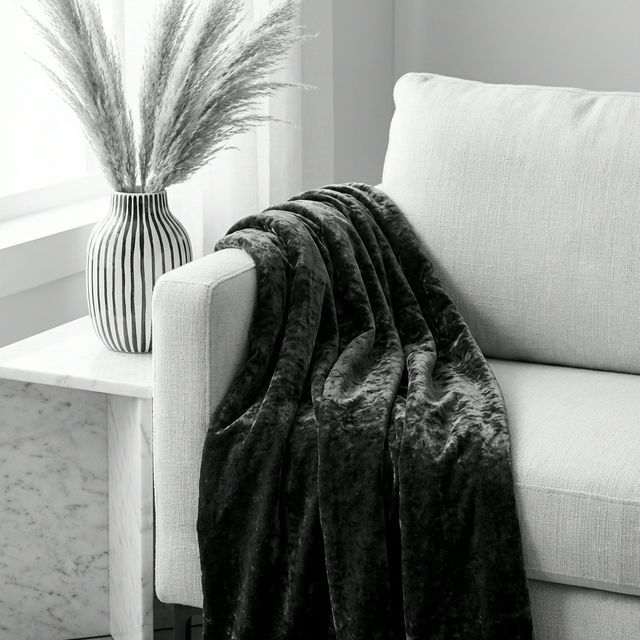
A black and white room with all smooth surfaces looks cold. Mixing at least three different textures creates the depth that makes people want to sit down.
Texture combinations that work together:
- Matte linen upholstery + glossy black marble coffee table + woven jute rug
- Leather sofa + chunky knit throw + brushed nickel hardware
- Velvet accent chairs + smooth ceramic lamps + raw wood side table
The rule of three: Every visible grouping should contain at least three different materials. A coffee table with a marble surface, a stack of matte paper books, and a brass candle holder creates more interest than three matching ceramic pieces.
Rugs matter more here than in any other color scheme. A flat black or white rug looks institutional. Go for a rug with visible pile, pattern, or weave: a high-pile white shag, a geometric black-and-white kilim, or a textured jute. Budget $150–$400 for a 5×8 area rug.
Lighting makes or breaks the room
Monochrome rooms depend on light more than colorful ones because there is no hue to generate visual energy. The light itself has to do that work.
Three-layer lighting setup:
- Overhead ambient light: a statement pendant or chandelier. Black matte fixtures read modern; white or brass fixtures soften the space. Avoid chrome: it looks cold in this palette.
- Task lighting: table lamps on end tables or a floor lamp near the reading chair. White or cream shades cast warm light; black shades create drama but reduce useful light output by about 30%.
- Accent lighting: LED strip lighting behind a TV console, under shelving, or inside glass cabinets. This creates depth at night and prevents the room from feeling like a single flat plane.
Color temperature: Use warm white bulbs (2700K–3000K). Cool white (4000K+) turns a black and white room blue-gray and uninviting.
Add one accent color: not three
The most common mistake in black and white living rooms is adding too many accent colors. One deliberate accent color, used in 2–4 places, creates cohesion. Three accent colors fights the monochrome palette and defeats the purpose.
Accent colors ranked by effectiveness:
| Accent color | Where to use it | Effect |
|---|---|---|
| Warm brass/gold | Light fixtures, drawer pulls, frame edges | Warmth without competing |
| Sage or olive green | One large plant, two throw pillows | Organic contrast |
| Terracotta | A single large vase, one throw blanket | Earthy warmth |
| Soft blush | Pillows, a single art print | Subtle softening |
Colors to avoid: Bright red (cliché), royal blue (reads corporate), neon anything (fights the sophistication).
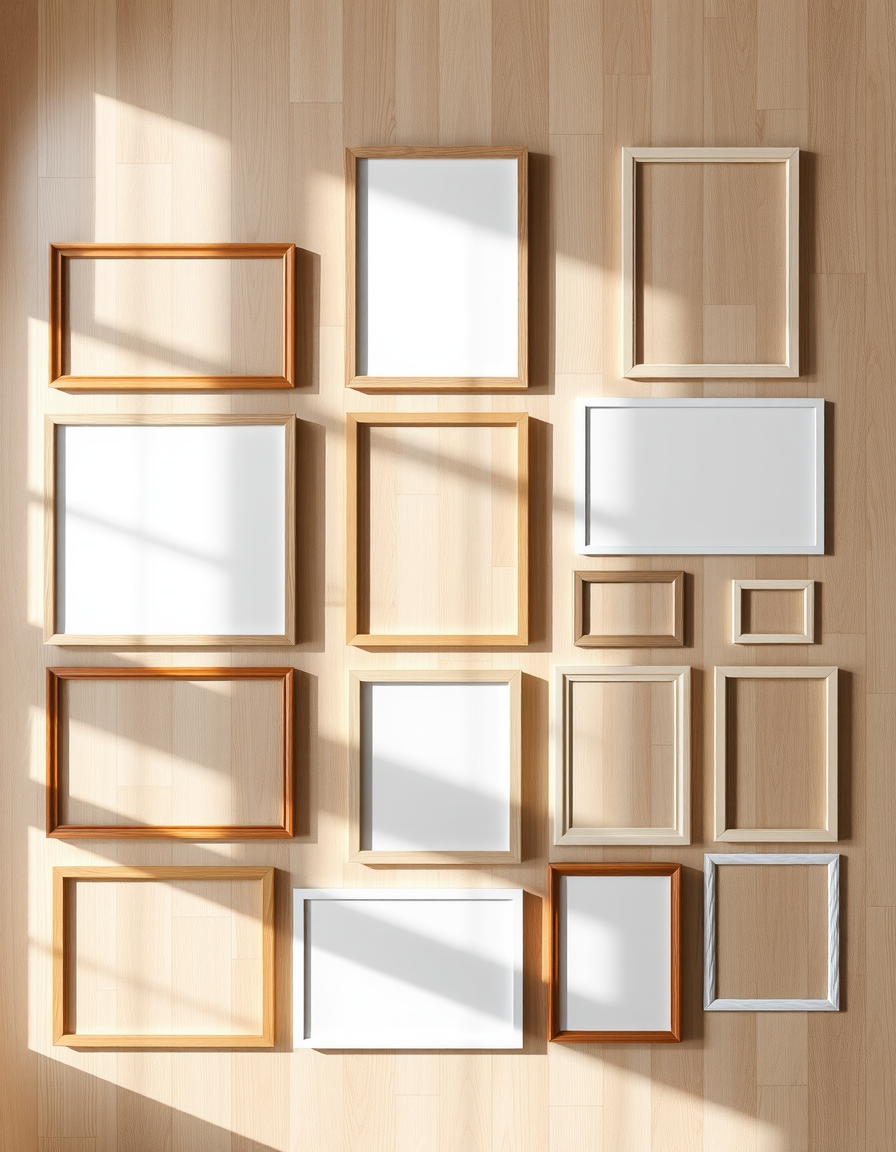
Wall art and gallery strategies
Empty white walls in a black and white room look unfinished. But the art you choose carries more weight here because there is no color distraction.
What works:
- Black and white photography in thin black frames: classic for a reason. Group in odd numbers (3, 5, or 7)
- Large-scale abstract art with subtle gray tones: one oversized piece above the sofa
- Line drawings in simple frames: quiet and modern
- Mirrors with black frames: they reflect light and make the room feel larger
Spacing rule: Leave 2–3 inches between grouped frames. Center the group at 57 inches from the floor (average eye level).
Furniture layout for a black and white room
Because the color palette is limited, the arrangement of furniture carries more visual weight.
Symmetrical layouts work well here. Two matching armchairs facing a sofa across a coffee table creates the formal balance that suits a monochrome palette. This does not work as well in colorful rooms where asymmetry feels playful: in black and white, symmetry reads as intentional.
The 60-30-10 ratio: 60% of visible surfaces should be the dominant color (usually white: walls, ceiling, large upholstery). 30% should be the secondary color (black furniture, rug, frames). 10% is the accent (brass hardware, a green plant, one warm-toned throw).
Budget breakdown
| Item | Budget range | Priority |
|---|---|---|
| Sofa | $800–$1,500 | High: foundation piece |
| Area rug (5×8) | $150–$400 | High: adds texture |
| Coffee table | $200–$600 | Medium |
| 2 accent pillows | $40–$100 | Low cost, high impact |
| Throw blanket | $30–$80 | Medium |
| Gallery wall art (3–5 pieces) | $100–$300 | Medium |
| Statement light fixture | $150–$500 | High: sets mood |
| Total room refresh | $1,470–$3,480 |
A full room redesign at the lower end of this range can transform a beige or mismatched living room into a cohesive black and white space over a single weekend.
Bottom Line
A black and white living room works when you treat the limited palette as a feature, not a constraint. The absence of color shifts attention to texture, form, and light. Get those three right: varied materials, warm-toned lighting, and a single deliberate accent: and the room feels considered rather than empty.
Frequently Asked Questions
Is a black and white living room boring?
Not if you layer enough texture and vary the shades between pure black and pure white. A room with charcoal, cream, ivory, slate, and matte black contains a wide tonal range even though it reads as “black and white.” The risk is not boredom: it is flatness from using only two flat tones without variation.
What accent colors work best with black and white?
Warm metallics (brass, gold, copper) add warmth without visual noise. If you want a color, stick to one muted tone: sage green, terracotta, or soft blush: and repeat it in 2–4 spots. Avoid bright primary colors unless you want a pop-art look.
How do I make a small black and white living room feel larger?
Use white as the dominant color (walls, ceiling, largest upholstered piece). Keep black to smaller accents: frames, lamp bases, pillows. Add a large mirror on the wall opposite the largest window. Use warm white lighting (2700K) to prevent the space from feeling clinical.
Related Guides
- TV wall ideas: media wall designs that complement a black and white room
- Bookshelf styling guide: how to style shelves within a limited color palette
- Cozy bedroom ideas with warm tones and textures: texture layering principles that apply to any room
Sources
- Performance fabric stain resistance: Crypton Home Fabrics
- 60-30-10 color rule: Architectural Digest, “The Color Formula Designers Swear By”
- Gallery wall spacing standards: Smithsonian Institution display guidelines