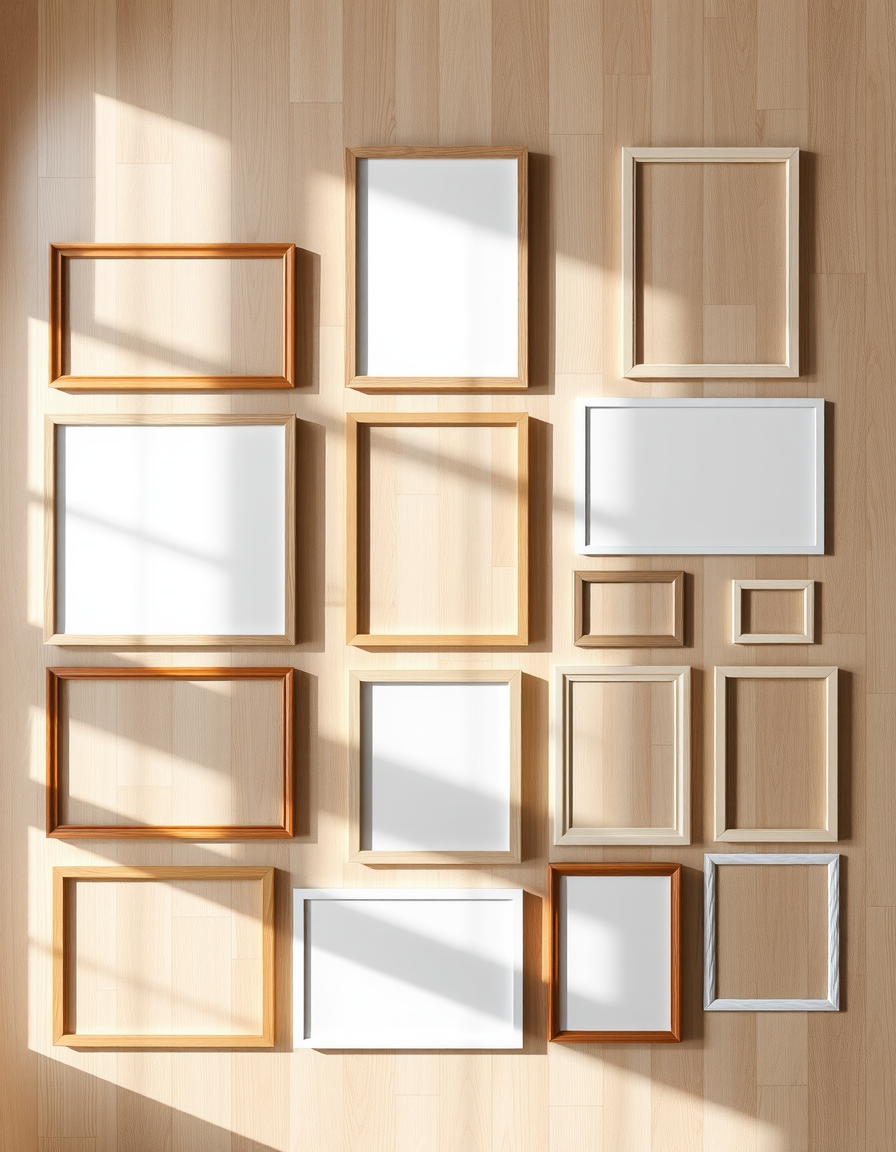
TV wall ideas: style your screen area

Affiliate Disclosure: DecorDesignIdeas.com is a participant in the Amazon Services LLC Associates Program, an affiliate advertising program designed to provide a means for sites to earn advertising fees by advertising and linking to Amazon.com.
As an Amazon Associate, we earn from qualifying purchases. This comes at no extra cost to you.
A turned-off TV is a black rectangle. No sofa can fix that if the wall is an afterthought: a screen, two cable holes, and nothing else.
The fix is not always hiding the TV. It is making the wall work as a viewing plane first, then as a composition. Decor that crosses into the picture is not decor.
DecorDesignIdeas Editorial compares MantelMount and CE Pro mounting notes, SMPTE / THX viewing-angle rules as published in trade write-ups, and what actually survives a movie night. This desk does not run an AV lab, and we do not invent a “screen must be one-third of the wall” statistic.
Seated lighting around the same sofa is in living room lighting ideas. Layouts when the TV is the only architectural feature are in small living room layout with TV. Frames beside the screen should follow gallery wall layout ideas, not a random grid.
Listing check: shelf, raceway, and mount links below are tagged Amazon searches we use to compare listed depth, length, and weight rating. We are not restating Amazon “home theater” copy. Sit in the real seat and tape the rectangle before you drill.
Before you hang anything
The TV is for sitting. The wall should be planned from the cushion, not from the ladder.
- Do the seat test. Sit in the spot you actually use. Let your shoulders drop. Look straight at the wall. MantelMount’s published rule is the one this desk uses: the center of the screen should land at or slightly below that eye line. In many rooms that lands around 40–45 inches off the floor. Treat that as an outcome, not a starting number. Your cushion sink is the number.
- Tape the rectangle. Painter’s tape the width and height of the set. Watch that tape for a minute. If you are already lifting your chin, lower the plan.
- Measure viewing distance. SMPTE’s long-running 30-degree field-of-view note works out to about 1.6 × the diagonal for everyday TV. THX’s more cinematic 36-degree note is closer to 1.2 × the diagonal. Those are published angle rules, not a promise your 65-inch will “feel like a theater.” A 65-inch set at 8–11 feet is a common living-room band; your sofa may not move.
- Find the studs and the outlet. A pretty gallery that misses the studs is a future repair. In-wall power is licensed work if you do not already have a box.
- Plan the cables first. Two white HDMI leads hanging like streamers will beat any wood slat. Raceway, in-wall kit, or a wireless hop comes before frames.
When to skip a TV-wall “upgrade”
| Move | Do it when | Skip it when |
|---|---|---|
| Gallery around the set | You can keep frames out of the screen edge and the hang is rated | Texture, fresh paint, or you would hang over a bed-height sofa with adhesive only |
| Floating shelves | Mounted TV, 8–10 inch shelves, 4 inches of air to the screen | The shelf would sit in the picture or a trailing plant would hit the IR sensor |
| Accent paint | You can cut a clean line and the room can take one darker wall | Rental with a no-paint clause; use a large rug and a console instead |
| Wood slats / shiplap | You own the wall and will hit studs through the panel | Rental, or you would nail 50 times into popcorn |
| Built-in millwork | You will stay, and the TV height is already honest | You would lock a too-high fireplace set into cabinetry |
| Frame / art-mode TV | You will use art mode and can control glare | Direct sun on the panel; you will see the screen through the “painting” |
| TV above the fireplace | Last resort, with a pull-down mount | You can put the set on a console at eye line instead |
CE Pro and MantelMount both treat fireplace-height TVs as the usual “too high” install. A pull-down mount is a compromise, not a correction. If you can put the set on a console, do that.
A renter who cannot drill should start with a media console, a cord cover, and leaned art. Damage-free hangs are in no-nail gallery wall and renter-friendly decor hacks. Do not hang a 55-inch on adhesive strips.
Style the wall around the screen, not instead of watching it
Most TV walls fail because the set is centered on empty drywall. The eye lands, finds nothing, and has nowhere to go. Every approach below gives the eye more than one rectangle, without decorating into the picture.
Desk note: “The screen should fill one-third of the wall” is a blog habit, not a viewing rule. Size the set to the seat distance (the 1.2–1.6× diagonal starting math above), then style what is left. A small TV on a huge wall can still be the right TV if you sit close.
Six approaches, compared
| Approach | Cost | DIY level | Works best with | Risk |
|---|---|---|---|---|
| Gallery wall | $50–$200 | Easy | Any TV size | Frames creep into the picture |
| Floating shelves | $40–$120 | Easy | Mounted TVs | Shelf depth blocks the edge |
| Accent paint / wallpaper | $30–$150 | Easy | Large walls | Paint clauses; busy pattern fights the show |
| Wood paneling | $100–$400 | Moderate | Mid-century, modern | Permanent; must hit studs |
| Built-in millwork | $500–$2,000+ | Hard / pro | Large walls | Expensive, locks a bad height in |
| Concealed (art frame) | $1,000–$2,000 | Easy | Low-glare rooms | Cost; sun washes the art mode |
1. Gallery wall around the TV
Surround the set so it becomes one rectangle among several.
Layout rules this desk uses:
- Mix frame sizes
- Keep 2–3 inches between frames
- Stay outside the screen edge. Six inches of gallery past the TV is a composition check, not a license to overlap
- Mix two or three frame finishes, not seven
- One larger piece beside or above can help; “larger than the TV” is optional, not required
What goes wrong: too many small frames, or frames that sneak into the image. For a 55-inch, 8–12 frames is a starting count, not a quota.
Measured sofa-width hangs are in gallery wall layout ideas.
Budget: $50–$200 if you thrift frames and print at home.
2. Floating shelves flanking the TV
Two or three shelves per side, staggered. Style them like a short bookcase. The method is in bookshelf styling.
Positioning:
- Top shelf near the top of the set
- Bottom shelf near the bottom
- Middle shelf offset, not a perfect ladder
- Depth 8–10 inches so the shelf does not enter the picture
- At least 4 inches of air from shelf end to screen edge
What goes wrong: shelves that box the TV, plants that drape onto the panel, objects that block the sensor.
Budget: $40–$120 for basic floating shelves.
Browse 8-inch-deep floating shelves and read listed depth and weight against the stud plan, not the styled photo.
3. Accent paint or wallpaper
One different wall makes the set look placed on purpose.
Color strategy:
- Dark charcoal or forest green: a black screen disappears when off
- Warm terracotta or clay: the wall is the feature; the TV contrasts
- Quiet texture (grasscloth, faux linen): skip busy botanicals that fight the show
Paint or paper the TV wall only. Keep the sides quieter.
A weekend paint or peel treatment is in DIY accent wall ideas under $50.
Budget: $30–$80 for paint, $80–$150 for one wall of peel-and-stick.
4. Wood paneling
Vertical slats or horizontal boards add a plane the set can sit on.
Options:
- Shiplap: coastal / farmhouse. About $3–$7 per square foot in current boards
- Vertical slats: modern. About $5–$15 per square foot
- Stained plywood: cheaper uniform texture. About $2–$4 per square foot
Build the slats on a backer, then mount the backer. Mount the TV bracket through the panel into studs. Do not hang a 60-pound set on finish nails.
Budget: $100–$400 depending on wall size.
5. Built-in millwork
Cabinets beside the set, shelves above, closed storage below. This hides boxes, speakers, and games.
DIY path: IKEA Besta-style units side by side with a continuous top. About $400–$800 in current kits before trim.
Pro path: custom starts around $1,500 and climbs.
When it is worth it: you will stay, and the screen center is already at the seated eye line. Do not millwork a fireplace-height mistake in place.
6. The disappearing TV
Samsung The Frame and similar art-mode sets show stills when off. The bezel mimics a frame.
Pros: the set can read as a large print.
Cons: 55-inch art-mode sets still start around $1,000 in current listings. Direct sun shows the panel through the image. Art subscriptions are extra if you do not load your own files.
Budget alternative: a sliding panel or a motorized cover ($200–$400 listing band). Confirm the cover clears the vents.
Which approach to pick
Renting: console + cord cover + leaned frames, or paint if the lease allows. Gallery only with a rated hang.
About $100 and one weekend: darker paint plus two shallow shelves.
You like woodworking: slat wall, TV into studs.
You are staying and the height is already right: built-ins.
Cable management, do this first
None of the above survives two dangling white leads.
| Method | Cost | Difficulty |
|---|---|---|
| In-wall cable pass-through kit | $15–$30 | Moderate; cut drywall, follow code |
| Paintable adhesive raceway | $10–$20 | Easy |
| Cord-cover raceway | $8–$15 | Easy |
| Wireless HDMI hop | $40–$100 | Easy; check listed latency if you game |
Browse paintable cable raceway kits and match listed length to the run from the set to the outlet.
A console under the set is often the cleanest cable story. Styling that console is in console table decor.
Related Guides
- Living room lighting ideas, keep 2700–3000K off the screen
- Small living room layout with TV
- Gallery wall layout ideas
- Console table decor
- Bookshelf styling
- DIY accent wall ideas under $50
- Black and white living room ideas
Sources
- Screen center at seated eye level: MantelMount, Optimal Viewing Angles
- Trade summary of eye-level mounting and fireplace-height problems: CE Pro, How High to Mount a TV in the Home
- SMPTE ~30° and THX ~36° field-of-view starting math as published in viewing-distance explainers (diagonal × 1.6 and × 1.2)
Bottom Line
Sit down, tape the rectangle, then decorate around it. Cables and eye line beat slats and frames. If a shelf or a plant enters the picture, it is in the way.
Frequently Asked Questions
How do I make a TV wall look good?
Get the height honest, hide the cords, then add one supporting plane: paint, shallow shelves, or a measured gallery that stays out of the image. A media console under the set does more than a second row of tiny frames.
How high should I mount my TV on the wall?
Center of the screen at your seated eye line. Many rooms land near 40–45 inches off the floor; your cushion is the measurement. The usual miss is mounting while you stand, which always looks “too low” until you sit.
Should I put a TV above a fireplace?
Skip it if a console at eye line is possible. Mantels often sit 50–60 inches high, which pushes the screen center into a chin-up angle. If the fireplace is the only wall, a pull-down mount is the honest compromise, not a styling trick.