Kitchen island decor and styling
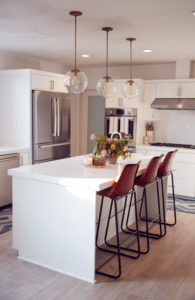
The kitchen island is the most used surface in most kitchens — it is where you prep food, eat meals, sort mail, do homework, and set down groceries. That dual role (workhorse and gathering spot) means it needs to be both functional and good-looking. Here is how to approach each element.
Types of kitchen islands
For more on this topic, see our guide on How to decorate above kitchen cabinets.
Not all kitchen islands are the same. The type you have determines what decor approaches will work.
For more on this topic, see our guide on Kitchen lighting guide: task, ambient, and accent layers (2026).
| Type | What it is | Best for |
|---|---|---|
| Rolling cart | Mobile, often butcher-block top | Small kitchens, renters |
| Table island | Table-height, open legs | Casual dining, farmhouse kitchens |
| Base cabinet + counter | Fixed cabinetry below, countertop above | Most standard kitchens |
| Peninsula | Attached to a wall on one end | Open floor plans, L-shaped kitchens |
| Bar | Raised counter height (42 inches) | Entertaining, open kitchens |
| Double-tier | Two levels — lower for prep, upper for dining | Kitchens that serve as dining rooms |
Materials
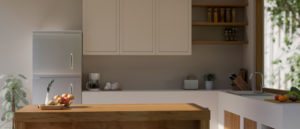
The countertop material sets the visual tone for the whole island:
- Wood/butcher block: Warm, natural feel. Works in farmhouse and traditional kitchens. Requires periodic oiling. $40-$80/sq ft installed.
- Quartz: Consistent color, non-porous, very low maintenance. Works in modern and transitional kitchens. $50-$100/sq ft installed.
- Granite: Natural stone with unique patterning. Each slab is different. $40-$100/sq ft installed.
- Marble: Classic, high-end appearance. Porous and stains easily — better as an accent than a full prep surface. $75-$150/sq ft installed.
- Stainless steel: Professional kitchen aesthetic. Durable and heat-resistant. Shows fingerprints. $80-$150/sq ft installed.
Design styles
Your island’s style should match (or at least not clash with) the rest of the kitchen:
- Traditional: Paneled cabinetry, turned legs or corbels, warm wood tones, stone countertop
- Modern: Flat-front cabinetry, waterfall counter edge, minimal hardware, quartz or concrete
- Farmhouse: Shaker-style doors, butcher block or soapstone, apron-front details, open shelving
- Coastal: White or light blue base, light wood counter, wicker stools, natural textures
- Industrial: Metal base or accents, reclaimed wood, exposed brackets, concrete countertop
Lighting
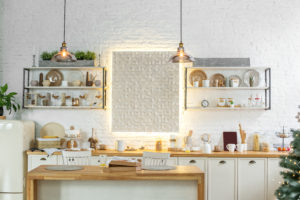
Island lighting is both functional (you need to see what you are cutting) and decorative (it defines the island from above).
Pendant lights are the most common choice. General rules:
- Hang the bottom of the pendant 30-36 inches above the island surface
- Use 2 pendants for islands under 6 feet long, 3 for islands 6-8 feet long
- Space pendants evenly across the island length, 24-30 inches apart
- Choose a bulb color temperature of 2700-3000K for a warm kitchen glow
Other options:
- Linear chandelier: A single long fixture that spans most of the island length. Clean look for modern kitchens.
- Recessed lights: If you have low ceilings or do not want anything hanging, recessed cans on a dimmer work well. Less decorative but more practical.
- Under-counter LED strips: Mount on the underside of an overhang for subtle accent lighting in the evening.
Seating
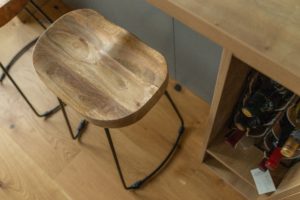
If your island has an overhang (at least 12 inches of counter extending past the base), it can accommodate seating.
Sizing guide:
- Counter height (36 inches): Use stools that are 24-26 inches tall
- Bar height (42 inches): Use stools that are 28-30 inches tall
- Allow 24 inches of width per seat, a 6-foot island fits 3 stools comfortably
Stool styles:
- Backless: Tuck completely under the island when not in use. Best for tight spaces.
- Low back: More comfortable for extended sitting. Works well for islands used as dining spots.
- Swivel: Easier to get on and off, especially for counter-height stools.
Centerpieces and everyday styling
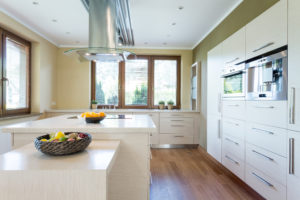
Keep island decor minimal, this is a work surface first. A centerpiece should take up no more than a third of the island’s width, so you still have room to prep food and set things down.
What works:
- A fruit bowl: Functional and colorful. Ceramic or wood bowls in the $15-$30 range. Refill weekly.
- A small potted herb: Rosemary, basil, or thyme in a 4-inch pot. Useful for cooking and adds greenery. Place near a window or under a grow light pendant.
- A tray with 2-3 small items: A candle, a salt cellar, and a small vase of flowers grouped on a 12-inch tray. The tray corrals the items and makes them easy to move when you need the counter.
- Seasonal swaps: A small pumpkin in fall, a pine clipping in winter, fresh flowers in spring. Change every few weeks.
What does not work: Large elaborate arrangements that take up half the island, items that cannot be moved quickly when you need the space, or decorative items placed where they will interfere with cooking.
Cleaning and maintaining your island
A kitchen island gets more wear than almost any other surface in the house. How you maintain it depends heavily on the material.
Butcher block and wood: Wipe down after every use. Apply mineral oil once a month, pour a quarter-sized amount on the surface and rub it in with a cloth. This prevents drying and cracking. Sand out any knife marks or stains with 220-grit sandpaper, then re-oil.
Natural stone (granite, marble, quartzite): Clean with warm water and mild soap. Avoid vinegar, lemon, or acidic cleaners on marble, they etch the surface. Reseal granite countertops every 12-18 months with a spray-on sealer ($12-$15 per bottle). Do the water droplet test: if water absorbs into the stone within 5 minutes instead of beading up, it is time to reseal.
Quartz and solid surface: The easiest to maintain. Wipe with soap and water. These are non-porous, so they do not need sealing, and they resist staining better than natural stone.
Stainless steel: Wipe in the direction of the grain with a microfiber cloth and a stainless cleaner or a 50/50 mix of vinegar and water. Avoid abrasive pads, they scratch.
Daily maintenance takes under two minutes and extends the life of any countertop material by years.
Related guides
- Console table decor, the three-layer formula works on islands too
- End table decor ideas, similar small-surface styling principles
- How to arrange plants in your living room, plant placement that extends to kitchen herb gardens
Sources
- Countertop material pricing: HomeAdvisor, Kitchen Countertop Costs
- Pendant light spacing guidelines: Lighting Research Center, Residential Lighting
- Stool height and spacing: NKBA Kitchen Planning Guidelines
Bottom Line
Kitchen island styling is about balancing function and aesthetics. Keep the work surface clear for cooking, style the non-cooking ends with a few intentional pieces, and use pendant lighting above to define the island as its own zone. If you use your island for meals, treat one end as a mini dining area with stools and keep the decor on the opposite side.
Frequently Asked Questions
How do I decorate a kitchen island without it looking cluttered?
Follow the ‘triangle’ rule: place three items of varying height at one end, such as a vase, a bowl of fruit, and a small plant. Leave the rest of the surface clear for prep work. A decorative tray corrals items and signals this is the ‘styled’ zone.
What lighting works best over a kitchen island?
Pendant lights hung 30–36 inches above the countertop surface. Use 2 pendants for islands under 6 feet, and 3 for longer islands. Space them evenly and center them over the island. Choose fixtures that complement your kitchen style, industrial, modern, or farmhouse.
Should I put a fruit bowl on my kitchen island?
Yes, a fruit bowl adds color, serves a practical purpose, and is one of the few decorative items that actually belongs in a kitchen. Choose a bowl that matches your kitchen style, and keep it restocked. An empty fruit bowl looks worse than no bowl at all.